
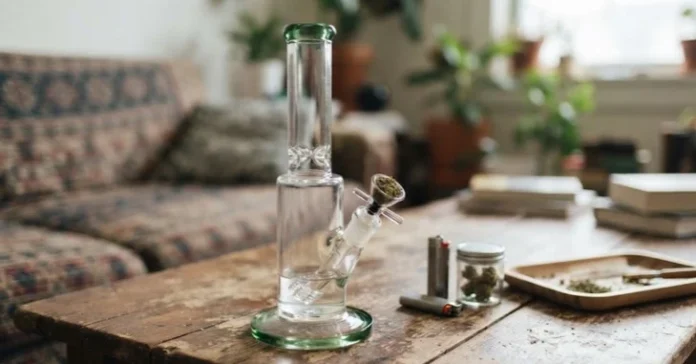
A weed bong is a water pipe commonly associated with smoking cannabis flower. Water cools the smoke before inhalation, while different designs change airflow, stability, and cleaning needs. For U.S. adults, choosing one also requires attention to local laws and the health risks of smoke exposure. Also worth reading: Homemade Bong Risks, Materials, and Safer Choices for U.S. Adults.
Direct answer: A practical water pipe should fit your priorities for size, material, stability, airflow, and maintenance. Simple glass designs are usually easier to understand and clean. Extra percolators can increase diffusion, but they also add resistance and harder-to-reach surfaces.
| Factor | What to compare | Why it matters |
| Material | Glass, silicone, acrylic, ceramic | Changes durability, weight, cleaning, and feel |
| Shape | Beaker, straight tube, compact | Affects stability, storage, and handling |
| Percolation | Basic downstem or added perc | Changes diffusion, airflow, and maintenance |
| Size | Compact to large | Affects portability and storage |
| Joint size | Common standardized sizes | Determines accessory compatibility |
| Cleaning | Simple or complex interior | Influences routine maintenance |
| Legal context | Federal, state, and local rules | Rules can differ across U.S. jurisdictions |
What Is a Weed Bong?

A weed bong is a water pipe with a chamber, mouthpiece, bowl connection, and water reservoir. Smoke travels through water before reaching the mouthpiece. Some designs also contain internal diffusion features called percolators.
Water can cool smoke and change how it feels to draw. It does not remove every harmful substance created by combustion. The CDC’s cannabis and lung health guidance states that smoked cannabis can damage lung tissue.
The same CDC guidance says cannabis smoke contains many toxins and irritants also found in tobacco smoke. This matters when evaluating claims that water filtration makes smoking harmless. A smoother sensation should not be mistaken for the absence of respiratory risk.
Seven Things to Check Before Choosing a Water Pipe
1. Start With the Material
Borosilicate glass is common because it handles temperature changes better than ordinary glass. Clear construction also lets you see water levels and residue. Its main weakness is obvious: glass can break when dropped or knocked over.
Silicone offers greater impact resistance and suits people concerned about accidental drops. Ceramic pieces can feel substantial and offer distinctive designs. Acrylic models are usually lightweight, though they provide a different feel and cleaning experience.
Material should match where the piece will be stored and maintained. A delicate design makes little sense in a crowded space. Durability can matter more than decorative details for everyday ownership.
2. Compare Beaker and Straight-Tube Shapes
Beaker-shaped pieces have wide bases and larger lower chambers. Their broader footprint can improve stability on a flat surface. They also hold more water than many narrow designs.
Straight tubes use a simpler vertical shape with a smaller footprint. Their straightforward construction can make rinsing and inspection easier. A narrow base can be easier to tip than a wide beaker base.
Neither design is automatically right for everyone. Choose a beaker when stability is the main concern. Consider a straight tube when simple construction and compact storage matter more.
3. Decide Whether You Need a Percolator
A percolator divides airflow through several openings before smoke reaches the mouthpiece. Common versions include honeycomb, tree, showerhead, inline, and matrix designs. Each creates a different balance between diffusion and resistance.
Current comparison guides consistently identify a trade-off between added diffusion and maintenance. Complex internal glass can collect residue in narrow openings. Extra stages can also increase airflow resistance.
For most first-time owners, a simple design or single accessible percolator is the practical starting point. It limits cleaning complexity while retaining water diffusion. Multiple intricate chambers make more sense when maintenance is not a concern.
4. Think About Size and Storage
Large water pipes provide more chamber space but need more secure storage. They can also be harder to move safely between rooms. Compact pieces are easier to store but may hold less water.
Measure your intended storage area before choosing a tall piece. Consider cabinet height, shelf depth, and surface stability. Good storage reduces the chance of accidental damage.
Portability deserves separate consideration from height. Thick glass can make a small piece surprisingly heavy. A protective case may matter when you need to transport it legally.
5. Check Joint and Accessory Compatibility
Glass pieces often use standardized joint connections for removable components. Compatibility matters when replacing a bowl or another removable part. Buying the wrong size can leave an otherwise usable piece without a proper fit.
Check the listed joint size before purchasing replacement components. Also confirm whether the connection is male or female when that distinction applies. Product specifications should clearly provide these details.
Avoid choosing a design solely because it includes many accessories. A simpler setup with widely available replacement parts can be easier to maintain. Long-term usability often matters more than the original accessory count.
6. Consider Cleaning Before Buying
Simple interiors are usually easier to rinse and inspect than complex chambers. Tree and matrix percolators contain narrow internal structures that can require more attention. Showerhead and simpler inline designs may offer easier access.
Regular maintenance also prevents residue from becoming harder to remove. Avoid sudden temperature changes when cleaning glass because thermal stress can cause damage. Follow the manufacturer’s instructions for the specific material.
Cleaning difficulty is easy to overlook while shopping. Yet it directly affects whether a piece remains practical after repeated use. Treat maintenance as a buying factor, not an afterthought.
7. Check the Rules Where You Live
U.S. rules surrounding cannabis and related equipment are not uniform. Federal law under 21 U.S.C. § 863 specifically names water pipes and bongs within its drug-paraphernalia provisions. The statute also contains exemptions and considers intended use and other circumstances.
State and local rules can add separate restrictions. Cannabis legality in one state does not establish the rules in another. Retail policies and minimum-age requirements can also depend on the jurisdiction and product classification.
Check current government guidance before buying, possessing, shipping, or traveling with smoking equipment. Nuturahey readers can also review the site’s CBD Store guide to U.S. legal and product checks. That guide explains why shipping availability alone does not establish legality.
Water Pipe Types Compared
Different designs solve different practical problems. The comparison below focuses on construction and maintenance rather than promising a particular smoking effect. Individual products can still differ considerably within each category.
| Type | Main advantage | Main drawback | Practical fit |
| Beaker | Wide, stable base | Takes more storage space | Everyday stationary setup |
| Straight tube | Simple construction | Narrower base | Easy maintenance |
| Mini | Compact storage | Smaller chamber | Limited-space storage |
| Single-perc | Added diffusion | More cleaning | Users accepting moderate upkeep |
| Multi-perc | More diffusion stages | Higher complexity | Users comfortable with maintenance |
| Silicone | Impact resistant | Different feel from glass | Durability-focused ownership |
For a first piece, a simple beaker-style borosilicate glass design is a practical general choice. Its broad base supports stability, while straightforward construction keeps maintenance manageable. People who prioritize durability over glass clarity may prefer silicone instead.
Does Water Make Cannabis Smoke Safe?
Water filtration should not be treated as a safety guarantee. CDC states that cannabis smoke can harm lung tissue regardless of how cannabis is smoked. Smoke can contain toxins, irritants, and carcinogenic compounds.
Secondhand exposure also deserves consideration. CDC reports that secondhand cannabis smoke contains THC and many chemicals also present in tobacco smoke. Children and other non-users should not be exposed to smoke indoors.
These facts matter because smoother smoke can feel less irritating. Sensation alone cannot measure respiratory risk. Current evidence does not support calling water-pipe smoking harmless.
Readers researching cannabis compounds can explore Nuturahey’s CBN vs CBD comparison. The guide explains differences between two cannabinoids without treating them as interchangeable. It also covers the changing U.S. regulatory setting.
Common Buying Mistakes to Avoid
Appearance can dominate the decision when shoppers first compare pieces. Yet decorative complexity can increase fragility and cleaning demands. Practical features deserve equal attention before you spend money.
- Buying a tall piece without measuring storage space.
- Choosing complex percolators without considering cleaning.
- Ignoring joint size when planning replacement parts.
- Assuming heavier always means more durable.
- Treating smoother smoke as harmless smoke.
- Assuming cannabis or paraphernalia rules are identical nationwide.
Price can also distract from construction quality. Expensive glass is not automatically more practical for everyday ownership. Compare thickness, stability, replaceable parts, and artistry instead of relying on price alone.
How Cannabis Context Changes the Decision
Cannabis laws and terminology can become confusing across different products. Hemp, marijuana, CBD, CBN, and THC do not always receive identical legal treatment. Product type and jurisdiction can change which rules apply. We cover this in more depth in CBD and tiredness.
Nuturahey’s best soil for cannabis guide provides another example of this legal variation. It explains why U.S. readers should confirm cultivation rules before making related decisions. The same verify-first principle applies to smoking accessories.
You can also follow Nuturahey’s CBD coverage for current cannabinoid information. Laws and federal policies can change, making dated assumptions unreliable. Government sources should remain the final reference for legal questions.
Choose for Practicality, Not Complexity
A good water pipe should match your needs for durability, storage, cleaning, and straightforward maintenance. Simple glass designs often make those factors easier to judge. Added internal features should provide enough value to justify their extra upkeep.
For U.S. readers, legal context and respiratory health belong in the decision too. Check current state and local requirements rather than relying on general claims. Then compare construction and maintenance with realistic expectations about smoke exposure.
Frequently Asked Questions About a Weed Bong
What does a weed bong do?
It passes smoke through water before the smoke reaches the mouthpiece. This process cools the smoke and can change airflow. It does not make cannabis smoke harmless.
Is glass better than silicone?
Glass offers visibility, rigidity, and a traditional water-pipe design. Silicone provides greater resistance to accidental drops. The better material depends on your priorities for storage, maintenance, and durability.
Do more percolators always mean a better piece?
No. Additional percolators create more diffusion but can also increase resistance and cleaning difficulty. A well-designed simple piece may suit daily maintenance better.
Are bongs legal everywhere in the United States?
No single nationwide answer covers every situation. Federal law contains drug-paraphernalia provisions, while state and local laws can differ. Check current rules for your jurisdiction and intended use.
Does bong water remove harmful chemicals from cannabis smoke?
Water can cool smoke, but it does not eliminate the health risks of combustion. CDC says smoked cannabis can damage lung tissue. Cannabis smoke also contains toxins and irritants.