

An electric bong replaces some part of a conventional water pipe’s manual heating process with powered electronics. The exact technology varies by product, so the name alone doesn’t reveal how a device heats material. U.S. adults should check the heating method, intended material, water filtration, battery design, and manufacturer instructions before comparing models.
Direct answer: An electric water pipe uses powered components for ignition, heating, airflow, or temperature control. Some models combust dry material, while others vaporize flower or concentrates. Because manufacturers use similar names for different technologies, buyers should confirm the heating method and intended material instead of relying on the product label.
| Key question | Practical answer |
|---|---|
| What does the device do? | It combines electronic components with a water-pipe style design. |
| Does every model burn material? | No. Some combust, while others vaporize. |
| Is it the same as an e-rig? | Not necessarily. E-rigs usually vaporize concentrates electronically. |
| Does water make smoke harmless? | No. Water cooling does not remove every harmful combustion product. |
| What should buyers compare? | Heating system, intended material, glass quality, battery, cleaning, parts, and warranty. |
| Are U.S. rules identical everywhere? | No. Federal, state, and local rules can differ. |
Key Takeaways
- The term covers several electronic water-pipe designs.
- Product names do not always accurately indicate combustion or vaporization.
- Dry-herb devices and concentrate-focused e-rigs should not be treated as identical.
- Water filtration can cool smoke or vapor, but it does not remove every health concern.
- Buyers should check materials, replaceable parts, battery information, and cleaning requirements.
- Cannabis laws and accessory rules vary across the United States.
- Adults should verify local rules before buying or possessing smoking-related equipment.
What Is an Electric Bong?
An electric bong is generally a powered water-pipe device that reduces reliance on a lighter, torch, or manual heating process. Electronics may control ignition, heating, temperature, airflow, or multiple functions at once. The exact design depends heavily on the manufacturer and product category.
Current online descriptions do not use the term consistently. Some newer products use powered ignition while still producing smoke through combustion. Other sellers apply similar language to devices that heat material without burning it.
That difference matters because smoke and vapor are not interchangeable. A device that burns plant material produces combustion products, even when electricity supplies the heat. A vaporizer aims to heat material without reaching the same combustion process.
Why the Name Can Be Confusing
The market has no universally accepted definition for electronic water pipes. Retailers may use terms such as e-bong, electronic water pipe, smart water pipe, or digital water pipe. Those labels can describe products with different heating systems and intended materials.
One product may use an electronic igniter to burn dry flower. Another may function more like a water-cooled dry-herb vaporizer. A third product, an electronic water pipe, may be designed for concentrates.
This creates a simple rule for shoppers. Read the technical specifications before trusting the category name. The chamber, heating method, and intended material usually tell you more than the headline.
How Electronic Water Pipes Differ From Traditional Designs
A traditional water pipe usually relies on an external flame to heat or ignite material. An electronic model adds powered hardware somewhere in that process. The electronic system may provide ignition, controlled heating, powered airflow, or digital controls.
Adding electronics also creates new ownership considerations. Batteries require charging, heating elements can wear out, and electrical components need proper cleaning. Glass-only products generally have fewer powered parts that can fail.
Electronic designs may reduce the need for an open flame. That can be convenient where wind makes a lighter unreliable. It does not remove the need to follow manufacturer safety instructions.
| Feature | Traditional water pipe | Electronic water pipe | E-rig |
|---|---|---|---|
| Main heat source | Usually external flame | Powered ignition or heating | Electronic heating |
| Common material | Dry flower | Depends on design | Usually concentrates |
| Water filtration | Common | Common | Common on larger models |
| Temperature control | Usually no | Model dependent | Often available |
| Battery required | No | Usually | Usually |
| Replaceable heating parts | Rare | Model dependent | Common |
| Open flame needed | Usually | Often no | No |
Combustion and Vaporization Are Not the Same
Combustion occurs when plant material burns and produces smoke. Vaporization uses heat to release compounds without intentionally burning the material. These processes create different outputs and should not be grouped automatically.
The CDC states that smoked cannabis can harm lung tissue, regardless of the smoking method. Cannabis smoke contains many toxins and irritants also found in tobacco smoke. Water filtration does not change the fact that combustion has occurred.
That distinction matters most when evaluating product advertising. Words such as “electronic” or “flameless” do not prove that a device avoids combustion. Check whether the manufacturer describes burning, ignition, vaporization, or controlled temperature heating.
Electric Water Pipe Versus E-Rig
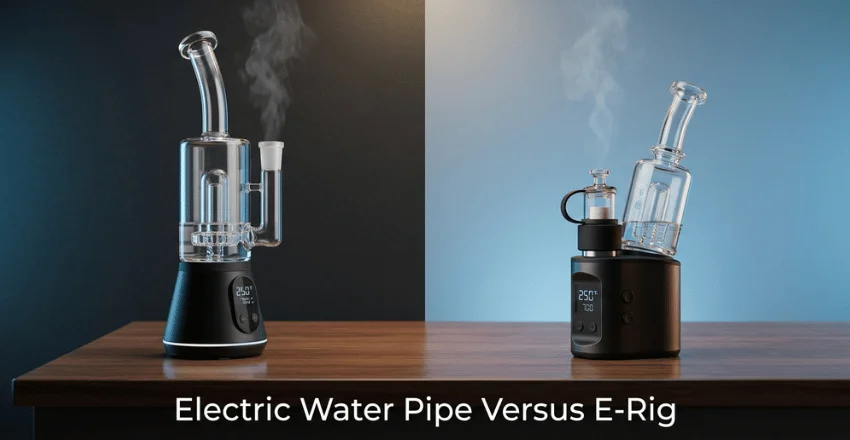
An e-rig is usually designed to vaporize cannabis concentrates through an electronically heated chamber. Many models also route vapor through water before it reaches the mouthpiece. That water-filtered appearance can make an e-rig resemble other electronic water devices.
The intended material provides the clearest distinction. Concentrate systems generally use an atomizer, bucket, or similar heated chamber. Dry-flower systems use hardware designed around plant material instead.
People comparing the categories should avoid assuming that attachments are interchangeable. Heating chambers, glass sections, seals, batteries, and replacement parts are often product-specific. Manufacturer documentation should decide compatibility, not visual similarity.
Seven Features Worth Checking Before You Compare Models
Product specifications are more useful than promotional labels. A detailed product page should explain what the device heats and how its heating system works. Missing technical information makes meaningful comparison harder.
Check these seven areas before evaluating value:
- Heating method: Determine whether the device combusts or vaporizes its intended material.
- Intended material: Confirm whether it supports dry flower, concentrates, or another stated material.
- Water chamber: Look for stable glass construction and easy access for cleaning.
- Battery information: Check charging method, battery guidance, and manufacturer safety instructions.
- Replaceable components: Identify whether heating chambers, glass, seals, or other parts can be replaced.
- Cleaning requirements: Make sure residue-contacting sections can be maintained without soaking electronics.
- Warranty and support: Confirm that the seller explains warranty coverage and replacement-part availability.
These checks also help separate useful specifications from marketing language. A bright display or mobile application cannot compensate for unclear heating information. Repairability can matter more than cosmetic features during long-term ownership.
NuturaHey’s homemade bong safety guide explains why material quality deserves attention around heated smoking equipment. Household plastics, coatings, adhesives, and unknown metals can create avoidable uncertainty. Purpose-built construction provides clearer information about intended materials and maintenance.
Cleaning and Maintenance Matter More With Electronics
Water pipes collect moisture and residue during use, so regular cleaning remains important. Electronic models add components that may not tolerate immersion or aggressive cleaning solutions. Owners should follow the specific cleaning instructions supplied with their device.
Removable glass can make maintenance easier because it separates washable sections from powered hardware. Replaceable chambers and seals can also extend the product’s useful life. A design that cannot be opened or inspected may become harder to maintain.
Never assume that an entire device is waterproof because its glass section holds water. Water resistance ratings apply only when the manufacturer states them. Handle damaged charging ports, batteries, or housings according to manufacturer guidance.
Health Considerations for U.S. Adults
Water can cool smoke before inhalation, but cooling does not make smoke harmless. The CDC says cannabis smoke contains many of the same toxins and carcinogens found in tobacco smoke. Smoking can also increase respiratory symptoms such as coughing and mucus production.
Secondhand exposure also deserves attention in shared spaces. The CDC reports that secondhand cannabis smoke contains toxic and cancer-causing chemicals. It can also contain THC, creating possible exposure for people nearby.
People with respiratory or cardiovascular concerns should discuss cannabis use with a qualified healthcare professional. Device marketing cannot determine personal medical risk. Electronic heating also does not cancel the risks associated with inhaling smoke.
U.S. Legal Questions Are More Complicated Than Product Labels
Cannabis laws vary by state, local jurisdiction, federal property, and product categories. Legal adult-use access in one state does not create one nationwide rule. Buyers should check current rules where they live and where they plan to possess equipment.
Federal law also contains specific provisions concerning drug paraphernalia. Section 863 of Title 21 lists water pipes, electric pipes, and bongs among examples considered in the statute. The law also includes exemptions, so legal application depends on circumstances and lawful use.
NuturaHey’s broader CBD store guide offers a useful approach to changing U.S. rules. Verify current laws instead of relying on broad retailer claims. Shipping availability should never be treated as a legal opinion.
How to Evaluate a Product Page
A useful listing should explain the heating system in plain language. It should identify the intended material, major components, charging requirements, and cleaning process. Technical claims should be specific enough for buyers to verify.
Be cautious with vague phrases such as “advanced technology” without supporting details. Claims like “safer smoke” also deserve scrutiny unless credible evidence supports them. Product descriptions should explain functions rather than imply medical benefits.
Check whether replacement parts are available before focusing on decorative features. A proprietary chamber or glass component may eventually need replacement. Long-term ownership becomes harder when essential parts disappear.
Who May Prefer a Conventional Water Pipe Instead?
Electronic hardware adds complexity that not every adult user needs. Someone who prioritizes simple construction may prefer a conventional glass design. Fewer powered components also mean fewer charging and battery concerns.
A conventional option may also be easier to inspect and clean. Electronic systems can contain internal components that users cannot easily examine.
Readers comparing conventional designs can review NuturaHey’s CBD News and cannabis coverage for related educational material. The site also covers product materials, cannabis law, and questions about responsible purchasing. Those topics can help buyers compare equipment beyond appearance.
What Current Search Results Get Wrong
A major problem in current search results is overconfidence about terminology. One source may define every powered water pipe as a vaporizer. Another may insist that the same phrase always means electric combustion.
Neither approach works across the entire market. Manufacturers and retailers currently use overlapping names for different product architectures. The specification sheet should settle the question for each device.
That uncertainty is also why comparisons should separate technology from branding. Ask what becomes hot, what material enters the chamber, and whether combustion occurs. Those answers are more useful than whichever category name appears in the product title.
A Practical Next Step
Start by identifying which technology you are researching before comparing individual products. Decide whether the device uses combustion, dry-herb vaporization, or concentrate vaporization. Then compare materials, maintenance, battery information, parts, warranty terms, and legal requirements.
Avoid assuming that water filtration makes inhaled smoke risk-free. Also avoid treating an electronic heating system as proof of vaporization. The heating method remains the most important distinction.
For U.S. readers, responsible comparison also includes current local law. Regulations can change, and state rules can differ sharply. Use official government sources when a purchase or possession decision depends on legality.
Frequently Asked Questions
Is an electric bong the same as a vaporizer?
Not always. Some powered water pipes vaporize material, while other designs use electronic ignition and still create combustion. Read the heating description before deciding which category applies.
The key question is whether the intended material burns. Burning produces smoke, while controlled vaporization aims to avoid combustion. Similar glass designs do not make those processes identical.
Does an electronic water pipe still use water?
Many models use water chambers to cool smoke or vapor. The water system often resembles the filtration found in conventional glass equipment. Exact fill levels and cleaning requirements depend on the manufacturer.
Water changes temperature and airflow characteristics, but it does not eliminate all inhalation risks. Combustion still produces harmful substances when burning occurs. Follow manufacturer instructions for maintenance and water levels.
Is an e-rig the same thing?
Usually not. An e-rig commonly refers to an electronic device designed to vaporize concentrates. Many e-rigs use water filtration, which creates visual similarities.
The intended material is the easiest distinction to check. Concentrate devices and dry-flower products may use completely different heating chambers. Don’t treat parts as interchangeable unless the manufacturer confirms compatibility.
Are electronic water pipes safer than traditional ones?
There is no simple answer that applies to every product. Removing an open flame may change certain handling risks. It does not automatically remove risks from smoke, heated materials, batteries, or cannabis use.
Safety depends on product design, heating method, materials, maintenance, and user health. Smoke from cannabis remains a respiratory exposure regardless of the ignition source. Medical concerns should be discussed with a healthcare professional.
Are these devices legal everywhere in the United States?
No single answer covers every state and circumstance. Cannabis, accessory, age, shipping, and possession rules can vary. Federal law also contains provisions concerning drug paraphernalia.
Check current state and local requirements before purchasing or possessing equipment. Rules can also differ on federal property. An online seller’s willingness to ship does not establish legality.