

A homemade bong may look like a cheap substitute for a purpose-built water pipe. Yet improvised smoking devices can introduce hazards that users may not expect. Heat, plastic, coatings, adhesives, sharp edges, and poor cleaning can all create avoidable risks.
This guide does not explain how to build a smoking device. Instead, it explains the main safety, material, and legal concerns. U.S. adults can use this information to make more informed choices.
A homemade water pipe can create extra risks because household materials were not designed for repeated heat or smoke exposure. Plastics, coatings, adhesives, and improvised metal parts may behave unpredictably when heated. Purpose-built products also avoid many structural problems found in makeshift devices.
| Key question | Practical answer |
|---|---|
| Is a DIY water pipe automatically safe? | No. Household materials may not tolerate heat or repeated use. |
| Is plastic a good smoking-device material? | It can soften, melt, deform, or release unwanted compounds when heated. |
| Does water remove smoking risks? | No. Water may cool smoke, but combustion still creates harmful exposure. |
| Are legal rules the same nationwide? | No. Federal, state, and local rules can differ. |
| Is an improvised device cheaper? | Initially, perhaps. Damage, contamination, and replacement can erase that advantage. |
| What is the safer choice? | Avoid improvised heated materials and check local laws before using cannabis accessories. |
Key Takeaways
- Household materials are not automatically safe around flame, heat, or hot smoke.
- Water filtration does not make smoke harmless.
- Plastic bottles, coated metals, adhesives, and unknown components raise extra concerns.
- Improvised devices may be harder to clean and inspect.
- Federal law specifically addresses drug paraphernalia, including water pipes and bongs.
- State cannabis and accessory laws can differ substantially.
- A purpose-built product avoids many hazards created by improvised construction.
Why a Homemade Bong Can Carry Extra Risk
The Homemade Bong main problem is not simply that a device was made at home. The problem is uncertainty about materials, temperature tolerance, construction quality, and cleanliness. Everyday containers were usually designed for food, drinks, storage, or packaging.
Those products may behave differently around direct heat or repeated hot smoke. Their coatings or components may also degrade after several uses. A user often has no reliable way to evaluate those changes.
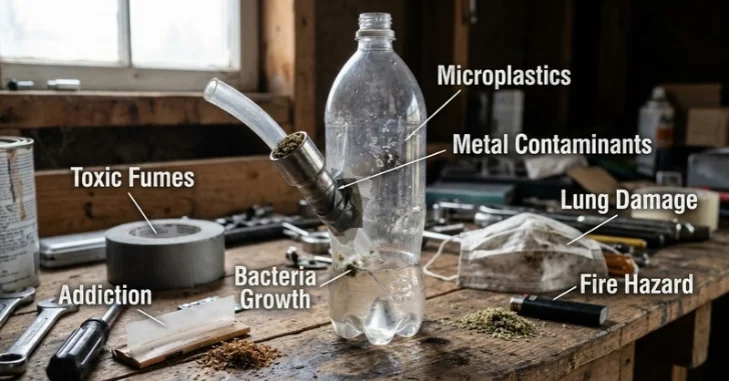
A published case report described severe alveolar bleeding after marijuana smoking through a plastic-bottle water pipe. One medical case cannot establish the risk for every user. Still, it illustrates why improvised heated materials deserve caution.
7 Risks to Consider Before Using an Improvised Water Pipe
1. Plastic Was Not Designed for Direct Heat
Many household plastics are intended for cold liquids or ordinary storage. They may soften, warp, or chemically change when exposed to higher temperatures. The exact response depends on the polymer and additives.
That uncertainty makes random plastic containers poor candidates for heated smoking equipment. Smoke can also pass close to surfaces that were never tested for inhalation use. Avoiding heated household plastic removes that uncertainty.
2. Metal Surfaces May Have Unknown Coatings
A metal object may appear heat-resistant while still having paint, plating, ink, or protective coatings. Those surface treatments can respond differently from the base metal. Household products rarely include inhalation-safety information.
Scratches and repeated heating can also expose new surfaces over time. That makes visual inspection an unreliable safety test. Purpose-built components provide more predictable materials and construction.
3. Adhesives and Sealants Can Add Another Exposure Source
Improvised devices often depend on substances created for repairs, crafts, or household sealing. Those materials may tolerate room temperature without tolerating hot air or smoke. Their intended use usually does not involve inhalation.
Heat can also weaken a seal and create leaks. A damaged joint may then expose nearby material to even more heat. Avoiding improvised adhesives eliminates that chain of problems.
4. Sharp Edges Can Cause Cuts
Cut bottles, cans, glass, or rigid household materials can develop sharp surfaces. Small cracks may also grow after repeated handling or temperature changes. These injuries have nothing to do with cannabis itself.
A makeshift device may also become unstable after modification. That increases the chance of spills, cuts, or burns. A stable commercial design generally reduces these mechanical hazards.
5. Cleaning Can Be Difficult
A smoking device needs regular cleaning because residue and moisture collect inside it. Improvised shapes may contain narrow spaces that are difficult to reach. Rough cuts and seams can also trap residue.
Persistent moisture can create unpleasant odors and unsanitary surfaces. Reusing a dirty device increases exposure to accumulated material. A design that can be disassembled and cleaned is easier to maintain.
6. Water Does Not Make Smoke Safe
Water can cool smoke and capture some material. It does not remove every combustion product or eliminate inhalation risks. The American Lung Association warns that marijuana smoke contains many toxins, irritants, and carcinogens also found in tobacco smoke.
That means cooler smoke should not be confused with harmless smoke. Device design cannot remove all risks created by burning plant material. People with breathing conditions may face additional concerns.
7. Legal Rules Can Be Complicated
Federal law defines drug paraphernalia broadly and specifically names water pipes and bongs. The statute contains exemptions, including certain authorized activities and traditionally lawful tobacco items. Application can therefore depend on purpose, circumstances, and governing law.
State rules add another layer. Cannabis possession, adult-use access, medical programs, and accessory rules vary across the country. Check current state and local requirements rather than assuming another state’s rules apply.
Homemade Bong Materials That Raise Red Flags
A useful safety rule is simple. Household items should not be assumed safe merely because they can hold water. Their intended function matters.
Extra caution is warranted around:
- thin disposable plastics;
- painted or coated metal;
- unknown alloys;
- cans with interior liners;
- craft glue;
- household sealants;
- rubber components with unknown heat ratings;
- cracked glass;
- sharp cut surfaces;
- printed or painted materials near heat.
This list is not a construction guide. It identifies material categories that can introduce uncertainty when heat and inhalation are involved. Avoiding questionable materials is safer than experimenting with them.
Homemade Bong Versus Purpose-Built Water Pipe
| Factor | Improvised device | Purpose-built device |
|---|---|---|
| Material information | Often unknown | Usually identified |
| Heat suitability | Uncertain | Designed for intended use |
| Stability | Variable | Usually engineered for stability |
| Cleaning | Can be difficult | Often designed for cleaning |
| Replacement parts | Rarely standardized | Often available |
| Sharp-edge risk | Can be higher | Lower with intact products |
| Legal certainty | Depends on circumstances | Still depends on applicable law |
| Upfront cost | Usually lower | Usually higher |
A makeshift option can appear attractive because it costs little. Yet price does not reveal material safety, durability, or cleanliness. The cheapest object may also be the least predictable under heat.
For readers comparing conventional designs, Nuturahey already covers bong materials and common features in its existing cannabis content. The site’s broader guide to where marijuana came from also explains how U.S. attitudes and laws developed over time.
U.S. Legal Context for Smoking Accessories
Federal law deserves careful wording because paraphernalia rules depend partly on intended use. Under 21 U.S.C. § 863, federal law restricts certain sales, interstate transportation, importation, and exportation. The statute also contains specific exemptions.
Cannabis policy can differ sharply between states. Legal adult possession in one jurisdiction does not guarantee identical accessory rules elsewhere. Federal property can also operate under separate restrictions concerning controlled substances and paraphernalia.
Nuturahey’s U.S.-focused cannabis articles repeatedly recommend checking current state rules before acting. That approach is sensible because cannabis laws and hemp rules continue changing. Its CBD Store guide provides another example of why location-specific legal verification matters.
Safer Decision-Making Without DIY Construction
The lowest-risk option is to avoid smoking altogether. Combustion creates exposure that water filtration cannot fully remove. People concerned about lung health should discuss cannabis use with a qualified healthcare professional.
Adults who still choose smoking should avoid improvised materials with unknown heat properties. Products intended for that purpose provide better information about material, cleaning, and handling. Local law should also be checked before purchasing or possessing an accessory.
Inspect any reusable device for damage before use. Cracks, chips, rough edges, and damaged components can create avoidable injuries. A device that cannot be cleaned thoroughly should not be treated as permanently reusable.
What to Do With an Unsafe DIY Device
Do not keep using an improvised device after noticing melting, cracking, strong chemical odors, or structural damage. Those signs suggest the material or construction is changing. Continued use adds uncertainty without providing any safety benefit.
Dispose of damaged household materials according to local waste rules. Glass and metal recycling requirements differ by municipality. Avoid handling cracked pieces with bare hands.
If someone develops chest pain, breathing difficulty, coughing blood, confusion, or another severe symptom, seek medical care promptly. Serious respiratory symptoms deserve professional evaluation. They should not be managed through internet advice alone.
A Better Next Step
Before using any cannabis accessory, check the laws that apply where you live. Consider material quality, stability, cleaning, and respiratory exposure rather than convenience alone. A few minutes of research can help you avoid questionable household materials.
Nuturahey’s cannabis coverage can provide broader background on the plant, U.S. rules, and consumer decision-making. Its article on cannabis origins explains historical context, while its CBD shopping guide shows how quickly legal details can change.
Frequently Asked Questions
Is a homemade bong safe to use?
A homemade bong cannot be assumed safe because household materials vary widely. Heat may affect plastic, coatings, adhesives, or improvised seals. Structural problems can also create cuts, leaks, burns, and cleaning issues.
Does bong water filter out harmful smoke?
Water can cool smoke and capture some particles. It does not remove every harmful compound created by combustion. Smoking therefore remains an inhalation exposure even when water filtration is present.
Are plastic water pipes dangerous?
Risk depends on the material, temperature, construction, and proximity to heat. Disposable plastic containers were not designed as smoking equipment. Avoiding heated plastic removes one preventable source of uncertainty.
Are homemade smoking devices illegal in the United States?
There is no single nationwide answer covering every situation. Federal law addresses drug paraphernalia and specifically names bongs and water pipes. State law, local law, intended use, and statutory exemptions can also matter.
Is glass safer than plastic around heat?
Purpose-built glass can offer better heat resistance than many disposable plastics. Damaged glass still presents cutting and breakage hazards. Material quality and intended use remain important.
Why do people search for a homemade bong?
Cost, convenience, curiosity, and lack of access can drive interest. Those reasons do not remove material or legal risks. Understanding the tradeoffs can prevent an impulsive choice from creating a larger problem.