

The blueberry kush strain is commonly described as an indica or indica-dominant cannabis cultivar with Blueberry and OG Kush ancestry. It is associated with berry aromas, earthy notes, and relaxing effects reported by consumers. Potency and chemical profiles can differ substantially between products carrying the same name. You might also like Cap Junky Strain.
Direct answer: Blueberry Kush is commonly described as an indica or indica-dominant cross of Blueberry and OG Kush. Users often report relaxing, sleepy effects and a sweet berry aroma. THC and terpene levels vary by batch, so a current laboratory report provides better evidence than a strain name alone.
| Key fact | What to know |
|---|---|
| Common type | Indica or indica-dominant |
| Reported lineage | Blueberry × OG Kush |
| Common aroma | Blueberry, sweet berry, earth, pine |
| Reported effects | Relaxed, sleepy, hungry |
| THC | Varies widely by batch and product |
| Commonly reported terpenes | Myrcene, caryophyllene, pinene, with profiles varying |
| Best evidence | Batch-specific laboratory testing |
| U.S. legal status | Depends on product type, state rules, and federal law |
Key Takeaways
- Blueberry and OG Kush are the most widely reported parent cultivars.
- Relaxation and sleepiness appear frequently in consumer reports.
- A single THC percentage should not be treated as universal.
- Berry sweetness often appears beside earthy, herbal, or pine-like notes.
- Terpene profiles can change between growers, batches, and product formats.
- Reported effects are subjective and should not be treated as medical outcomes.
- U.S. cannabis laws vary, so readers should check current local requirements.
What Is the Blueberry Kush Strain?
Blueberry Kush is widely described as a cross between Blueberry and OG Kush. That pairing helps explain the cultivar’s familiar berry-and-kush reputation. Several strain databases agree on the parent combination, even when other details differ.
The exact breeder history is less certain than the commonly repeated lineage. Some modern strain references describe the original breeder as unknown or disputed. That uncertainty matters because cultivar names are not always standardized across the cannabis market.
For broader historical context, read NUTURAHEY’s guide to where marijuana came from. Cannabis has a much longer history than modern strain branding suggests. Today’s cultivar names represent only one recent part of that story.
Is It Indica or Sativa?
Most major strain references classify this cultivar as indica or strongly indica-dominant. That classification matches consumer reports that often emphasize relaxation and sleepiness. Still, an indica label does not guarantee one predictable experience.
Cannabis classification can simplify chemistry that is much more complicated. Cannabinoid concentration, aromatic compounds, serving size, tolerance, and product format can all influence the experience. Two products with the same cultivar name may therefore feel different.
The label is best used as a broad description rather than a medical forecast. A laboratory report can reveal far more about a specific batch. Consumers should compare measured chemistry instead of relying only on an indica designation.
Genetics and Lineage
The most consistently reported lineage is Blueberry crossed with OG Kush. Blueberry contributes the name’s fruit-focused identity, while OG Kush is associated with earthy and pine-like characteristics. Those descriptions reflect cultivar traditions rather than guaranteed chemical outcomes.
The genetic story becomes less certain when sources discuss the original breeder. Some databases record no confirmed breeder for the first version. Other seed producers now sell their own cultivars under the same or similar names.
This duplication is one reason strain names require context. A Blueberry Kush flower from one producer may not match another producer genetically or chemically. Packaging and laboratory documentation can help distinguish one commercial product from another.
How Strong Is It?
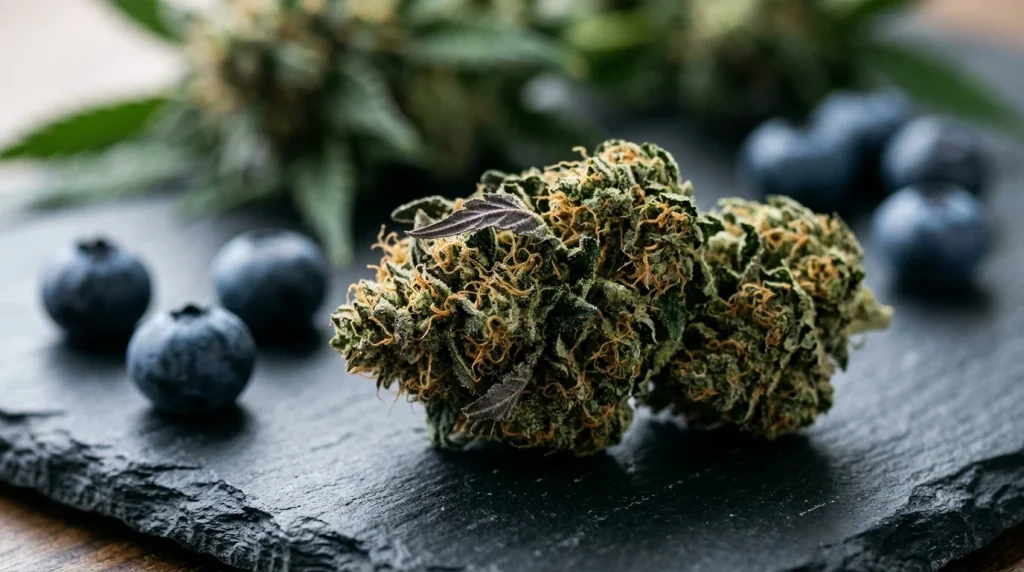
Published potency figures vary too much to support one universal THC percentage. Leafly currently lists about 18% THC for its strain profile. Other databases and laboratory datasets show higher values and much wider ranges.
CannaLib, for example, reports a broad laboratory distribution across hundreds of flower samples. AllBud lists a figure around 24% for its profile. These differences show why copying one percentage onto every batch can mislead readers.
THC concentration can also change with product format. Flower, infused pre-rolls, concentrates, and vape products should not be compared as though they have identical potency. Always use the laboratory result for the exact product or batch.
Higher THC does not automatically mean a better product. Greater exposure can also increase unwanted effects for some consumers. Individual sensitivity and prior experience can matter as much as a headline percentage.
Reported Effects and What They Mean
Consumer reports frequently describe relaxation, sleepiness, and increased appetite. Leafly lists sleepy, relaxed, and hungry among its leading reported effects. Those reports describe user experiences rather than controlled clinical outcomes.
A relaxing reputation explains why the cultivar is often associated with evening use. Some people also report euphoria or a calm body sensation. Others may experience anxiety, dizziness, dry mouth, or other unwanted effects.
Responses can change with dose, tolerance, product strength, and individual biology. A strain name cannot predict how every person will respond. People should avoid treating anecdotal effect descriptions as medical advice.
Claims about treating insomnia, anxiety, pain, or other conditions deserve extra caution. The FDA has not approved cannabis flower as a treatment for a disease or condition. Medical questions should be discussed with a qualified healthcare professional.
Flavor, Aroma, and Terpenes
Berry sweetness is the most recognizable sensory description attached to this cultivar. Earthy, herbal, pine, and pepper-like notes also appear in strain descriptions. The combination creates the familiar “blueberry plus kush” profile.
Leafly identifies myrcene as a prominent terpene in its profile. Caryophyllene and pinene also appear there. Other datasets report different leading compounds, which reinforces the importance of batch-specific testing.
Terpenes help shape plant aroma, but they should not be treated as guaranteed effect predictors. NUTURAHEY’s terpenes definition guide explains how these compounds differ from cannabinoids. It also explains why fragrance alone cannot reveal THC concentration or product purity.
A strong berry smell does not prove authenticity either. Cultivation conditions, storage, processing, and added flavor ingredients can affect aroma. The label and laboratory report provide more reliable context than smell alone.
Why THC and Terpene Numbers Differ Between Sources
Cannabis strain pages often present a clean number because readers want a simple answer. Real-world plant chemistry is not that uniform. Different batches can express different cannabinoid and aromatic profiles.
Growing conditions can influence the finished plant, while harvesting and storage also affect quality. NUTURAHEY’s guide on how to cure weed explains why moisture, storage, and degradation matter after harvest. These factors can alter what reaches the consumer.
Cultivation conditions also begin below the plant. Soil structure, drainage, and plant health can affect lawful production systems. NUTURAHEY’s guide to soil for cannabis covers those fundamentals without treating one growing medium as universally superior.
Commercial naming adds another layer of variation. Separate producers may use the same cultivar name for products with different genetics or chemical profiles. This makes a verified batch report more useful than a strain directory alone.
What to Check on a Cannabis Label or Lab Report
Start with the product’s cannabinoid results rather than the marketing description. Check THC and CBD measurements for the specific batch. Confirm that the certificate matches the lot number on the package.
A useful laboratory report may also include terpene results and contaminant testing. Requirements differ between U.S. jurisdictions, so the available information may vary. Testing standards should be evaluated within the rules governing that market.
Consider product format before comparing percentages. A flower percentage cannot be compared directly with an infused product or concentrated vape. The concentration and delivery method can change exposure considerably.
Do not assume that a familiar cultivar name guarantees quality or safety. A reputable regulated product should provide traceable labeling and appropriate testing. Marketing language cannot substitute for those records.
Safety Considerations for U.S. Adults
Cannabis can cause unwanted effects even when it comes from a regulated source. THC can impair attention, coordination, judgment, and reaction time. Driving or operating machinery after cannabis use creates serious safety concerns.
Smoking also carries respiratory risks. The CDC states that cannabis smoke contains many toxins and irritants also found in tobacco smoke. Smoking cannabis can harm lung tissue regardless of the cultivar being used.
High-potency products may create greater problems for people with low tolerance. Anxiety, paranoia, dizziness, or uncomfortable intoxication can occur. Keeping products secured from children and pets is also essential.
Cannabis can interact with personal health conditions or medications. Pregnant or breastfeeding people should follow current medical guidance regarding cannabis exposure. Anyone using cannabis for a health concern should speak with a qualified clinician.
U.S. Legal Considerations
Cannabis law remains different across states and product categories. State authorization for adult or medical use does not create one nationwide rule. Local restrictions can also affect possession, cultivation, transportation, or public use.
Federal rules distinguish marijuana from qualifying hemp, while federal cannabis policy continues to change. Product composition can therefore matter legally as well as chemically. Older articles may not reflect the latest federal or state requirements.
Consumers should check current government guidance for their own jurisdiction. A retailer shipping to a location does not by itself prove a product is lawful there. Travel between states can create separate legal issues.
For informational websites, this legal distinction matters when discussing any cannabis cultivar. Strain education should not be interpreted as a statement that possession is lawful everywhere. Readers should verify current rules before acting.
Frequently Asked Questions
Is the Blueberry Kush strain indica or sativa?
It is most commonly classified as indica or strongly indica-dominant. Consumer reports often associate it with relaxation and sleepiness. The label cannot guarantee an identical response for every product or person.
What is Blueberry Kush crossed with?
The most widely reported parents are Blueberry and OG Kush. Multiple major strain references repeat that lineage. The identity of the original breeder is less consistently documented.
Does it have a blueberry flavor?
Berry and blueberry notes appear frequently in aroma and flavor descriptions. Earthy, pine, herbal, and pepper-like notes may also appear. Actual sensory profiles can differ by batch and product format.
How much THC does it contain?
There is no single reliable percentage for every product with this name. Published sources show substantial variation between profiles and tested batches. A batch-specific laboratory report gives the most relevant number.
Does it make people sleepy?
Sleepiness is one of the most commonly reported consumer effects. Relaxation and increased appetite also appear frequently in strain databases. These reports do not guarantee the same effect for every person.
Is it good for insomnia or pain?
Some consumers report using the cultivar while dealing with sleep or discomfort. Those reports do not prove that it treats either condition. Cannabis flower is not FDA-approved as a treatment for insomnia or pain.
The Bottom Line
Blueberry Kush has earned a recognizable reputation through its reported Blueberry and OG Kush ancestry. Berry sweetness, earthy notes, relaxation, and sleepiness appear repeatedly across major strain references. The most important details still depend on the exact product and batch.
A strain name should be treated as a starting point rather than a complete chemical description. Check measured THC, other cannabinoids, terpene data, and available safety testing. Those details provide more useful evidence than a universal potency claim.
U.S. readers should also consider health risks and current laws before making decisions involving cannabis. NUTURAHEY’s related cannabis guides can provide broader context on chemistry, plant history, storage, and cultivation topics. Responsible information starts with evidence instead of assumptions.